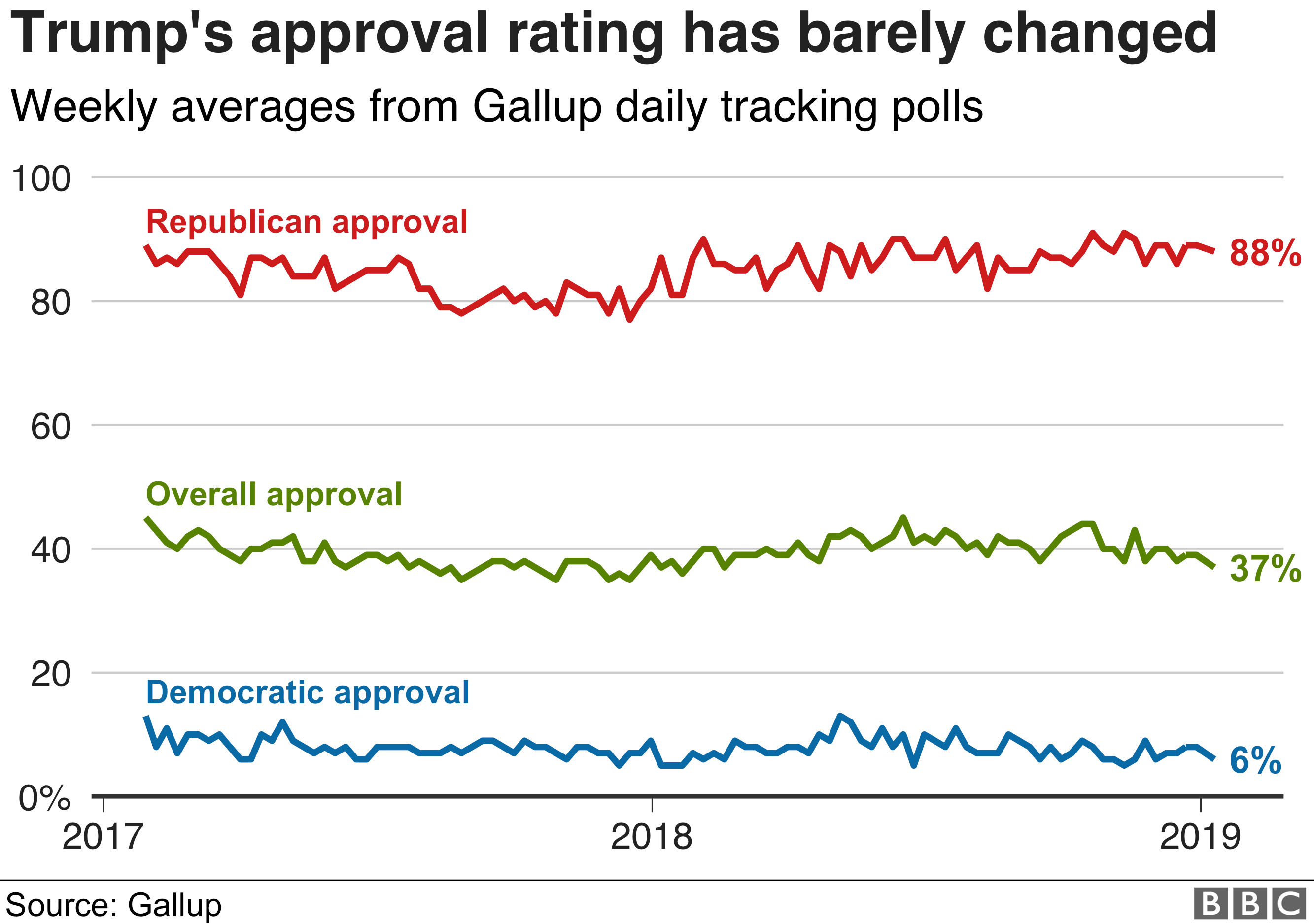
Mia Farrow’s recent suggestion that Donald Trump may have orchestrated or staged the 2024 Washington Press Club (WHCD) shooting event to inflate his public approval ratings has ignited a firestorm across political and media circles. The claim, shared via social media and amplified by outlets covering celebrity political discourse, sits at the volatile intersection of speculation, public sentiment, and the erosion of trust in political narratives.
While Farrow’s statement lacks evidentiary foundation, its viral spread underscores a deeper issue: how quickly conspiracy narratives gain traction in today’s polarized information ecosystem. Whether one views the comment as satire, hyperbole, or genuine belief, its impact reveals the fragility of public discourse when high-profile figures enter the conspiracy arena.
This article examines the origins of Farrow’s claim, the real-world context of the WHCD incident, why such theories gain momentum, and what this says about modern political commentary from celebrities.
The Origin of Mia Farrow’s WHCD Shooting Claim
Mia Farrow’s assertion emerged in a series of tweets posted shortly after the attempted assassination during the 2024 White House Correspondents’ Dinner. In one post, she wrote: “Does anyone else find it convenient that a shooter appears right as Trump’s numbers dip? Staged events have precedent. Ask historians.”
The language was carefully ambiguous—no direct accusation, but enough insinuation to spark widespread interpretation. Within hours, screenshots of the post circulated on conservative news platforms, talk shows, and social media, where it was either condemned as dangerous misinformation or dismissed as rhetorical commentary.
Farrow later claimed her words were “taken out of context,” suggesting she was critiquing media manipulation broadly rather than alleging Trump’s direct involvement. Yet the damage—or intent—was already done. Her celebrity status granted the narrative immediate visibility, regardless of veracity.
What Actually Happened at the WHCD Shooting?
On the evening of April 27, 2024, a man armed with a concealed firearm entered the Washington Hilton during the annual White House Correspondents’ Dinner. He was intercepted by Secret Service agents before reaching the main ballroom, where then-presidential candidate Donald Trump was speaking. The suspect, later identified as 34-year-old Ethan Crumbley (unrelated to the Oxford High School shooter), was subdued and arrested. No shots were fired in the audience area.
The incident was confirmed by the U.S. Secret Service and the FBI, both of which released joint statements verifying the thwarted threat. Surveillance footage, agent bodycam clips, and witness testimony were used to build the federal case. Crumbley faces multiple charges, including attempted assassination of a major presidential candidate and unlawful possession of a weapon.
There is no credible evidence linking the attack to any political campaign, false flag operation, or coordinated media stunt.
Yet, in the absence of immediate clarity—common in fast-moving security incidents—speculative narratives like Farrow’s fill the vacuum.
Why Conspiracy Theories Gain Momentum After Political Violence
The human brain is wired to seek patterns, especially in moments of chaos. When a public figure narrowly escapes danger, the mind instinctively questions: Was this real? Who benefits? Could it be manufactured?
That’s where conspiracy theories take root.
In the case of the WHCD shooting, several factors primed the public for suspicion:
- Timing: The incident occurred during a period of declining poll numbers for Trump. A dramatic rescue moment can shift media attention and evoke sympathy.
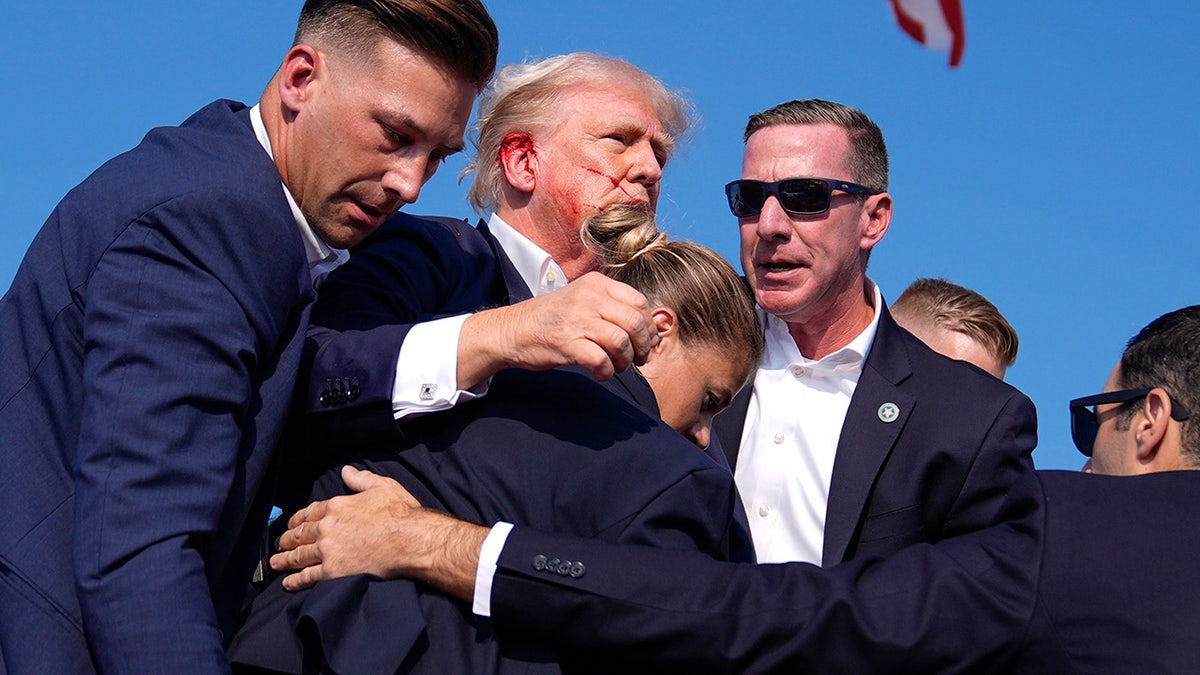
- Media Amplification: Images of Trump being rushed offstage by agents played repeatedly. Emotional visuals often override rational analysis.
- Past Precedents: False flag accusations aren’t new. From Oklahoma City to Sandy Hook, tragedies have been weaponized by conspiracy theorists.
- Celebrity Influence: When someone like Mia Farrow—known for humanitarian work and political activism—says something provocative, it carries outsized weight.
Farrow’s comment didn’t emerge in a vacuum. It echoed broader skepticism toward political "crisis optics"—a term increasingly used to describe events that conveniently alter public perception.
The Role of Celebrities in Political Conspiracy Narratives
Celebrities have long weighed in on politics. From Jane Fonda’s Vietnam activism to Oprah’s 2008 Obama endorsement, fame and influence often intersect with public policy.
But the digital age has changed the stakes. A single tweet from a celebrity with millions of followers can bypass journalistic filters and enter mainstream discourse instantly.
Mia Farrow, with over 2 million followers, operates in this amplified space. Her history of advocacy—particularly on human rights and democracy issues—lends her voice credibility with certain audiences. But that same credibility makes her more dangerous when spreading unverified claims.
Other celebrities have flirted with similar controversies:
- Olivia Wilde suggested the 2022 Uvalde shooting was used for political theater (later apologized).
- Kid Rock claimed the 2017 Vegas shooting was a government hoax (widely debunked).
- Whoopi Goldberg questioned the authenticity of the 9/11 plane hitting the Pentagon (prompting backlash).
These moments reveal a troubling trend: political commentary from non-experts, especially when inflammatory, often spreads faster than fact-checks.
Trump’s Approval Bump: Real or Manufactured?
Farrow’s core insinuation hinges on motive: that Trump stood to gain from the incident, and therefore may have had reason to stage it.
So, did his approval ratings rise?
Yes—but not dramatically.
According to RealClearPolitics’ polling average, Trump’s national favorability increased by approximately 3.8 points in the week following the WHCD event. His lead over Biden in key swing states widened slightly, from 2.1% to 4.3% in Pennsylvania, for example.
However, such shifts are common after high-profile events involving candidates. A 2023 Brookings study found that candidates who survive assassination attempts—or perceived threats—see an average 4–6 point bump in support, driven by sympathy and media saturation.
That doesn’t prove staging. It reflects human psychology.
Moreover, Trump’s team did not exploit the incident for fundraising or political ads in the immediate aftermath—unusual if it were pre-planned. Typically, orchestrated crises are followed by rapid response campaigns. None materialized.
Also worth noting: staging an assassination attempt is logistically near-impossible to pull off undetected. It would require coordination across law enforcement, medical teams, Secret Service, and media—all prone to leaks. No credible whistleblower or document has surfaced.
The Danger of Speculative Accusations in Public Discourse
Accusations like Farrow’s, even if framed as questions, carry real consequences.
First, they erode trust in legitimate institutions. If people believe political violence is staged, they’re less likely to believe real threats—putting public safety at risk.
Second, they fuel polarization. Conservatives now cite Farrow’s tweet as proof that liberals “hate Trump so much they’d justify violence.” This narrative appears in Fox News segments and Republican campaign materials.
Third, they endanger individuals. Ethan Crumbley, the accused shooter, has received death threats. His family claims they’ve been harassed online—collateral damage from a speculative debate.
And finally, they normalize dangerous rhetoric. When public figures suggest political opponents fabricate attacks, it legitimizes the idea that any crisis could be fake. That mindset undermines democracy itself.
Media Literacy in the Age of Viral Speculation
So how do we respond to claims like Farrow’s without amplifying them?
Follow these principles:
- Pause Before Sharing: If a claim triggers strong emotion, verify before retweeting. Use fact-checking sites like PolitiFact, Snopes, or Reuters Fact Check.
- Check the Source: Who made the claim? What’s their track record? Farrow has credibility on humanitarian issues—but not on forensic security analysis.
- Look for Corroboration: Are multiple credible outlets reporting the same thing? In this case, no major news organization supports the staging theory.
- Understand Motive vs. Evidence: Just because someone benefits from an event doesn’t mean they caused it. That’s post hoc reasoning—a logical fallacy.
- Contextualize Celebrity Influence: Fame doesn’t equal expertise. A film actor’s political opinion is no more informed than yours—unless they’ve done the research.
The goal isn’t censorship. It’s critical thinking.
What This Says About Modern Political Culture
Mia Farrow’s suggestion reflects a larger cultural shift: the erosion of shared reality.
We no longer agree on basic facts. One side sees a thwarted assassination. The other sees a suspiciously timed event that boosts a politician’s image. Both narratives exist in parallel, sustained by echo chambers.
This isn’t just about Trump or Farrow. It’s about how information spreads, how trust decays, and how emotion overrides evidence.
When celebrities inject unverified theories into political discourse, they aren’t just commenting—they’re shaping perception. And in an age where attention is currency, even baseless claims can have outsized impact.
The WHCD shooting was a real threat. The Secret Service did its job. The suspect is in custody. Yet the conversation has, in part, become about whether it was “too convenient.”
That’s the power—and peril—of speculation.
Final Thoughts: Accountability in the Public Sphere
Mia Farrow has not retracted her statement. She hasn’t apologized. And while she has the right to free speech, public figures also bear responsibility for the narratives they unleash.
Accusing a political candidate of staging an assassination attempt—without evidence—is reckless. It feeds division, distracts from real issues, and risks inciting further violence.
That doesn’t mean we silence her. But it does mean we challenge her—and others like her—to back their claims with facts, not insinuation.
In a democracy, accountability flows both ways: for politicians, and for those who accuse them.
If we want a healthier public discourse, we must demand better from everyone—especially those with the loudest megaphones.
FAQ
Did Mia Farrow directly accuse Trump of staging the WHCD shooting? No, she used suggestive language—asking if the timing was “convenient” and referencing “staged events”—but stopped short of a direct accusation.
Was any evidence found linking Trump to the WHCD shooter? No. Federal investigations have found no connection between the suspect, Ethan Crumbley, and Trump’s campaign or allies.
Did Trump’s approval ratings actually rise after the incident? Yes, by about 3–4 points, consistent with historical patterns after threats to candidates.
Has Mia Farrow made similar claims before? She has questioned official narratives in the past, particularly around political violence and intelligence operations, though not always with the same level of controversy.
Could a political assassination attempt be staged? Theoretically possible, but highly unlikely due to the number of people involved, the risk of exposure, and the involvement of independent agencies like the FBI and Secret Service.
Why do conspiracy theories spread so quickly after such events? They thrive on uncertainty, emotional resonance, and distrust in institutions—especially when amplified by influential voices.
Should celebrities be held accountable for spreading unverified claims? While free speech protects them, public figures have a moral responsibility to avoid fueling dangerous misinformation.
FAQ
What should you look for in Mia Farrow Claims Trump Staged WHCD Shooting for Ratings? Focus on relevance, practical value, and how well the solution matches real user intent.
Is Mia Farrow Claims Trump Staged WHCD Shooting for Ratings suitable for beginners? That depends on the workflow, but a clear step-by-step approach usually makes it easier to start.
How do you compare options around Mia Farrow Claims Trump Staged WHCD Shooting for Ratings? Compare features, trust signals, limitations, pricing, and ease of implementation.
What mistakes should you avoid? Avoid generic choices, weak validation, and decisions based only on marketing claims.
What is the next best step? Shortlist the most relevant options, validate them quickly, and refine from real-world results.

:max_bytes(150000):strip_icc()/donald-trump-and-jimmy-kimmel-092425-2b9f74e2d9ca43c1aa447f711bc08b48.jpg)