You’re walking down the street, minding your own business, when a sign catches your eye. At first glance, it seems innocent—maybe even mundane. But then your brain does a double take. That innocuous phrasing? That oddly worded warning? Suddenly, it hits you: it's filthy. And you can't unsee it.
Dirty signs aren't written that way on purpose—well, sometimes they are—but more often, they're glorious accidents of language. Poor grammar, unfortunate spacing, or unintentional double entendres turn the ordinary into the outrageously funny. These signs have gone viral for a reason: they’re the kind of comedy you can't plan, only stumble upon.
Here are 21 hilariously dirty signs that prove context is everything—and that people working retail, construction, or farming might need a second pair of eyes before posting anything publicly.
The Art of Accidentally Suggestive Signage
Signs are supposed to inform, warn, or guide. But when wording, punctuation, or spacing goes off the rails, they can do something entirely different: make you snort your coffee.
The best dirty signs don't scream vulgarity—they whisper it. They rely on implication, homophones, and syntactic ambiguity. A misplaced comma or a poorly chosen verb can transform a grocery reminder into something that sounds like a raunchy pickup line.
Take “We clean anything with a hole” from a carpet cleaning ad. On paper, it's about stains and upholstery. In your brain? It’s a full-on innuendo explosion.
These signs thrive in public spaces where oversight is minimal and creativity (or fatigue) is high. Gas stations, laundromats, and hardware stores are breeding grounds for linguistic chaos. Because when nobody’s proofreading, the subconscious mind takes over—and suddenly, “We service all models” doesn’t sound like an appliance repair shop anymore.
1. “We Clean Anything With a Hole”
Found outside a carpet cleaning van, this one went viral fast. It sounds like a specialty service for something far more personal than rugs. The intended meaning? They clean any carpet, even the hard-to-reach spots. The interpreted meaning? Let’s not say it out loud.
Why it’s funny: It’s the specificity that sells it. “Anything with a hole” is a phrase that belongs in a very different kind of manual.
2. “Please Use the Other Side. I’m Full and Leaking”
Spotted on a portable toilet at an outdoor festival. The humor here is layered—“full and leaking” could describe a number of bodily functions (or relationships). Combine that with “use the other side,” and you’ve got a sentence that sounds like a dramatic breakup line.
Reality check: Portable toilets do get full. But maybe skip the emotional language.
3. “Tight Asses Always Welcome”
A real sign from a gym. Meant to appeal to fitness enthusiasts aiming for toned glutes, but written this way, it sounds like an invitation to a very niche club. The gym later claimed it was a prank by a staffer.
Lesson: When marketing physical results, avoid phrasing that could double as a fetish hashtag.
4. “We Repair Windows That Have Been Broken By Spouses”
This one’s from a glass repair shop. While it suggests domestic drama (and possibly dark comedy), the real kicker is the implication: marital issues literally shatter windows. Whether you laugh or wince depends on your last argument about the thermostat.
Bonus humor: “Spouses” is oddly formal. “Angry husbands” would’ve been more honest.
5. “No Ball Play. Penetration of Rectum Is Not Allowed”
Found in a children’s playground. Yes, really. This sign allegedly appeared in a UK park and caused immediate confusion. The “penetration” line was likely a template error—someone forgot to delete boilerplate text from a different document.
Why it broke the internet: You don’t expect anatomy lessons in a swing set area.
6. “If You Can’t Reach It, We’ll Stick It In For You”
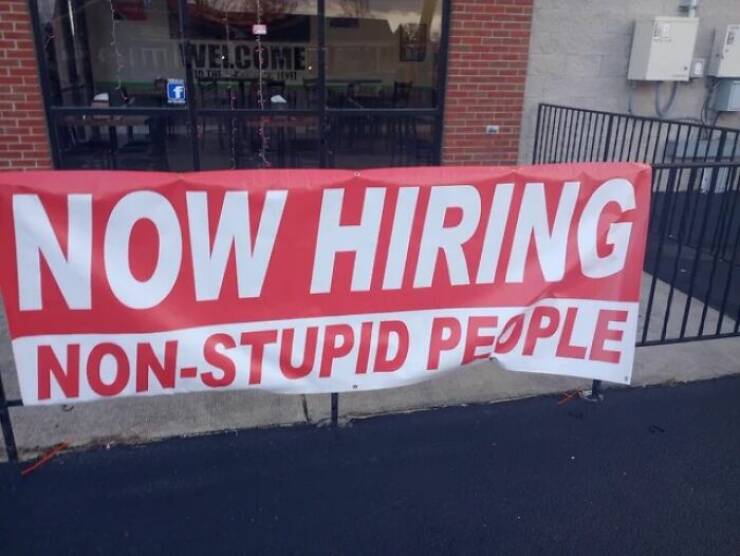
From a hardware store advertising extension poles. Perfectly reasonable service—helping customers install hard-to-reach fixtures. But the verb choice? Absolutely not.
Pro tip: Avoid "stick it in" when marketing to humans with imaginations.
7. “Pull Down and Let It All Hang Out”
On a hammock display at a camping store. Intended to demonstrate relaxation. Achieved peak innuendo. “Let it all hang out” is already a phrase loaded with casual and sexual connotations. Pair it with “pull down,” and you’ve got a slogan for a very different kind of retreat.
8. “We Handle All Types of Oral Work”
A dental clinic’s attempt at professionalism. But without context, this sounds like a classified ad from the 1970s. The clinic likely meant cleanings, exams, and fillings—but the internet heard something else entirely.
Damage control: They changed the sign. And probably hired a copywriter.
9. “Big Hot Dogs for Guys With Long Buns”
A roadside food truck that thought it was being playful. Instead, it created a sign that could headline a sex comedy. The combination of “big,” “hot,” and “long buns” is just too much.
Reality: They were selling footlongs. But no one cared after reading that.
10. “I Like Big Cans and I Cannot Lie”
A recycling center’s homage to Sir Mix-a-Lot. Clever? Yes. Risky? Extremely. While it’s a fun pop culture reference, it still made local news for being “inappropriate.” But let’s be honest—everyone smiled.
Verdict: Worth the controversy. But maybe not for schools.
11. “Please Don’t Cum on the Walls”
From a painting contractor. Meant to say “Don’t come on the walls”—as in, don’t approach wet paint. But with no space between “cum” and “on,” autocorrect lost the battle.
Result: A sign so distracting, customers forgot why they called a painter in the first place.
12. “We Do the Rear Ends Nobody Wants to Touch”
A septic tank cleaning service. Technically accurate. Emotionally triggering. The phrase “rear ends” combined with “nobody wants to touch” could describe a bad date or a plumbing nightmare. Context is the only thing saving this from being a Tinder profile.
13. “Get Your Pole in the Ground by Sundown”
A sign at a fencing company. Sounds urgent. Sounds suggestive. Sounds like the start of a very weird story. While they were talking about installing posts, the wording left little to the imagination.
Rule of thumb: If your slogan could be the title of an adult film, rewrite it.
14. “Lube Here”
A gas station with a motor oil service bay. Two words. Infinite implications. It’s short, it’s efficient—and it’s absolutely filthy. Could they have said “Lubrication Services”? Yes. Did they? Nope.
Why it worked: Sometimes less is more. Especially when “lube” is involved.
15. “Wet, Juicy, and Ready to Be Packed”
On a fruit stand selling peaches. The produce was fresh. The phrasing? Questionable. “Wet,” “juicy,” and “packed” in one sentence? That’s not marketing—that’s a seduction.
Customer quote: “I didn’t know I was shopping for fruit or a romance novel.”
16. “We Service All Models”
An electronics repair shop. Classic. Timeless. Universally misinterpreted. “Service” is a dangerous word in signage. So is “models.” Together, they create a mental image far removed from fixing laptops.
Pro move: The shop eventually added “Electronic Devices Only” in small print.
17. “Keep Your Package in the Bag Until You Get Home”
A pharmacy’s well-intentioned advice about prescription privacy. Meant to prevent embarrassment. Instead, it sounded like advice for a one-night stand. “Keep your package in the bag” is not a phrase you want associated with medication.
Outcome: They reworded it to “Please maintain discretion with prescriptions.”
18. “Hard Tools. Big Jobs. We Handle Them All.”
A hardware store’s pride in their inventory. But “hard tools” and “big jobs” opened the door to jokes about stamina and performance. The slogan wasn’t dirty at first—until the internet got involved.
Lesson: Test slogans on a diverse audience. Especially if “hard” is involved.
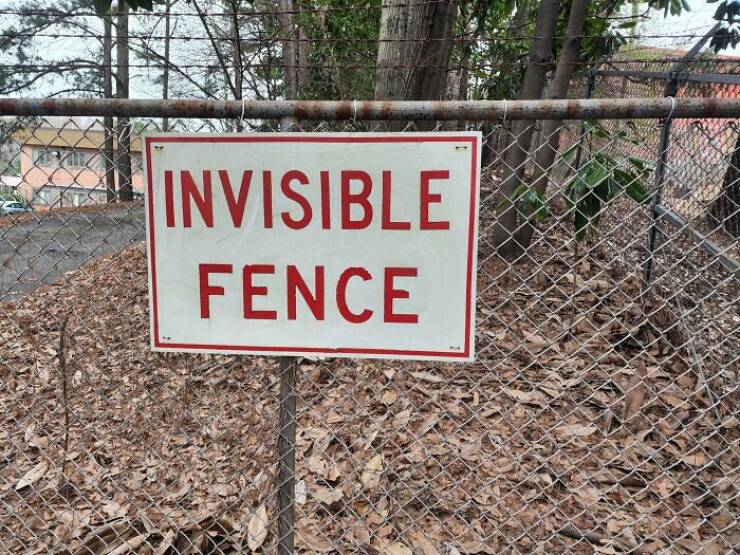
19. “We’re Closed on Mondays So We Can Get Laid”
A real (and short-lived) bar sign. This one wasn’t accidental. It was a bold, cheeky boast that backfired when families started walking in. The bar claimed it was a joke, but the damage was done.
Final verdict: Hilarious? Yes. Professional? Not even a little.
20. “Our Sausages Are Long, Firm, and Packed With Meat”
A butcher shop trying to sell quality sausages. Unfortunately, “long,” “firm,” and “packed with meat” are not words to use lightly in food marketing. Customers bought the sausages. But mostly, they took photos.
Takeaway: Describe taste, not texture, if you want to avoid jokes.
21. “You’ll Love How We Fill Your Hole”
From a landscaping company offering dirt delivery. They were talking about filling garden holes. But again—no context, just a bold promise. The sign was removed after three days, but not before being shared thousands of times.
Golden rule of signage: Never promise to fill holes without clarifying the type.
Why These Signs Work (Even When They Shouldn’t)
These examples aren’t just funny—they’re masterclasses in linguistic vulnerability. They show how easily language can betray intent. A single word shift can turn “service” into something scandalous.
They also reveal something about us: we’re wired to find humor in the inappropriate. Especially when it’s accidental. There’s a thrill in catching a sign that thinks it’s innocent but acts provocative.
Businesses can learn from this: proofread everything. Get a second opinion. And if you’re in doubt, ask: “Could this be misread as a sex joke?” If yes, rewrite it.
How to Avoid Creating a Viral (But Embarrassing) Sign
Creating clear, effective signage isn’t just about grammar—it’s about perception. Here’s how to avoid becoming the next internet meme:
- Read it aloud – If it sounds suggestive when spoken, it will be read that way.
- Test with diverse audiences – Kids, elders, and coworkers hear things differently.
- Avoid loaded words – “Stick,” “fill,” “service,” “lube,” and “hard” have alternate meanings.
- Use context wisely – A plumbing sign saying “We unclog drains” is safe. “We love a good plug” is not.
- Skip pop culture references – “I like big cans” might be clever, but not worth the risk.
A funny sign can boost attention—but only if it’s funny for the right reasons.
Sometimes, the best jokes aren’t told. They’re posted on a wall, forgotten, and discovered by someone who really needed a laugh. These 21 hilariously dirty signs prove that humor hides in the most unexpected places—often in plain sight, taped to a store window or painted on a van.
Next time you see a sign that makes you pause, chuckle, or glance around to see if anyone else noticed—take a photo. You might just be documenting comedy history.
And if you’re putting up a sign yourself? Triple-check the wording. Because once it’s out there, you can’t take it back—even if it’s “full and leaking.”
FAQ
Why do so many signs have dirty meanings? Language is full of double entendres. When signs use casual phrasing without context, innocent words can take on suggestive meanings.
Are these signs real or fake? Most are real—shared online from businesses, parks, or public spaces. Some are later removed or clarified.
Can a funny sign hurt a business? Yes. While some gain attention, others offend customers or damage professionalism.
What’s the most famous dirty sign? “We clean anything with a hole” is one of the most widely shared and referenced.
How can I report a suggestive sign? Contact the business owner or local authority. Most will correct it once made aware.
Do people create these signs on purpose? Some do—for shock value or viral attention. But most are honest mistakes.
Can I use these for a prank? Technically yes, but consider the consequences. A funny sign could get you fired—or famous.
FAQ
What should you look for in 21 Hilariously Dirty Signs That Will Make You Laugh Out Loud? Focus on relevance, practical value, and how well the solution matches real user intent.
Is 21 Hilariously Dirty Signs That Will Make You Laugh Out Loud suitable for beginners? That depends on the workflow, but a clear step-by-step approach usually makes it easier to start.
How do you compare options around 21 Hilariously Dirty Signs That Will Make You Laugh Out Loud? Compare features, trust signals, limitations, pricing, and ease of implementation.
What mistakes should you avoid? Avoid generic choices, weak validation, and decisions based only on marketing claims.
What is the next best step? Shortlist the most relevant options, validate them quickly, and refine from real-world results.

:max_bytes(150000):strip_icc()/donald-trump-and-jimmy-kimmel-092425-2b9f74e2d9ca43c1aa447f711bc08b48.jpg)