
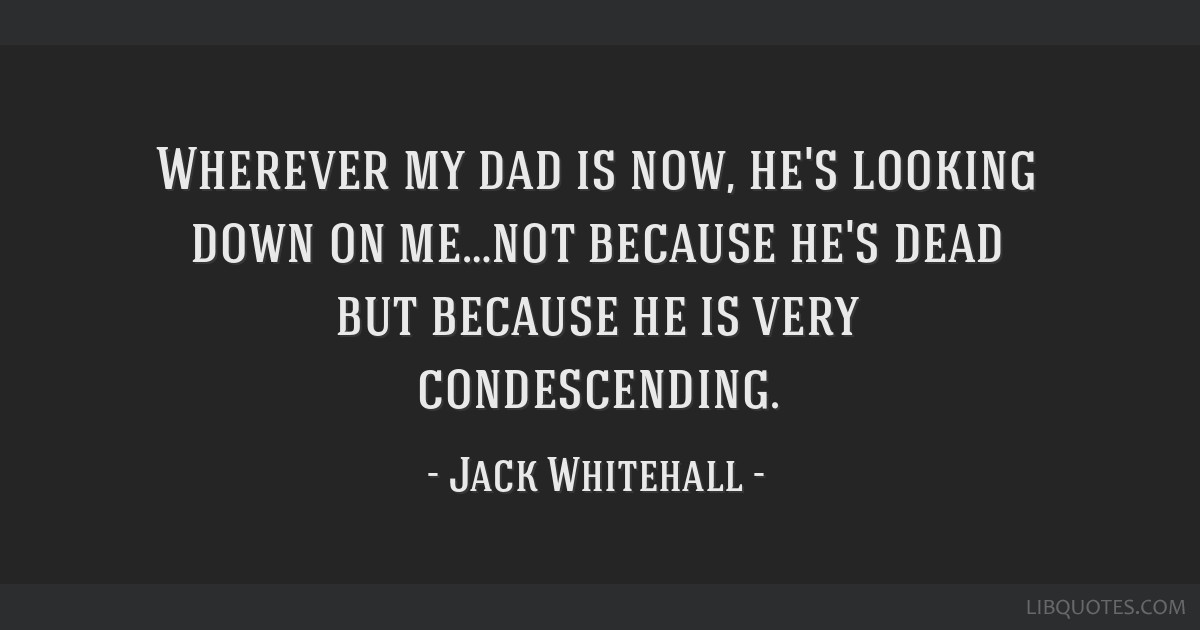
Jack Whitehall’s deadpan delivery of, “I’m sure wherever my dad is, he’s looking down on us. He’s not dead—just very, very disappointed,” isn’t just a punchline—it’s a mirror. It captures the weight of parental expectation, the absurdity of emotional distance, and the British habit of burying truth beneath sarcasm. This quote, widely shared as a “quote of the day” moment, resonates far beyond comedy. It’s a cultural artifact that quietly unpacks honesty, workplace dynamics, and the contradictions in how we relate to one another.
Whitehall, known for his sharp observational humor and deeply personal performances—especially alongside his reserved father, Michael, in Travels with My Father—uses comedy to expose emotional avoidance. That single line does more than make us laugh. It reveals how denial, understatement, and performance shape British identity, professional environments, and personal relationships.
Let’s dissect why this quote sticks—and what real-world lessons we can extract from its layered irony.
The Comedy of Emotional Repression
British humor thrives on understatement. Jack Whitehall’s joke hinges on subtext: a son acknowledging his father’s disapproval without ever stating it directly. The humor lands because it’s universally recognizable. Many of us have felt judged by a parent’s silence, a manager’s raised eyebrow, or a partner’s turned back.
- Whitehall’s quip works on three levels:
- Literal denial – “He’s not dead” is factually true but emotionally misleading.
- Emotional truth – “Very disappointed” cuts deeper than anger. Disappointment implies failure on a personal level.
- Social satire – It mocks the British tendency to avoid direct confrontation, even in grief or criticism.
This comedic framing reflects how many people—especially in traditional work cultures—communicate. Feedback is implied, not stated. Conflict is buried under pleasantries. The result? Misunderstandings, resentment, and a lack of psychological safety.
Real-world example: In a London ad agency, a junior designer submitted a campaign draft. Instead of constructive feedback, the creative director said, “It’s… interesting. Very bold choice.” The team later learned he hated it—but never said so. Sound familiar?
Whitehall’s joke isn’t just about a father-son relationship. It’s a commentary on how we don’t say what we mean—and how that damages honesty and connection.
Honesty as a Leadership Skill
The quote exposes a flaw in leadership: the myth that authority requires emotional distance. Michael Whitehall’s persona—stoic, critical, emotionally restrained—is a caricature of old-school British parenting. But it’s also a model still present in many workplaces.
Many managers believe that being “approachable” or “transparent” weakens their authority. They opt for the “disappointed dad” approach: silence, passive judgment, withheld praise. But studies consistently show that honest, empathetic leadership drives engagement and performance.
Consider these workplace truths revealed by Whitehall’s humor:
- Silence is interpreted as disapproval. If you don’t praise good work, employees assume it’s subpar.
- Humor can mask insecurity. Using sarcasm to deflect real conversation is a sign of emotional avoidance.
- Vulnerability builds trust. Leaders who admit mistakes and express appreciation foster healthier teams.
Whitehall’s comedy works because he names the unspoken tension. In a work context, doing the same—calling out awkwardness, admitting friction, asking for clarity—is not weakness. It’s emotional intelligence.
Case in point: A tech startup in Manchester noticed their sprint reviews were tense. After a team retrospective, one developer admitted: “I thought you hated my code because you never said anything.” The manager realized his silence was read as judgment. They implemented a “feedback ritual”—two compliments and one suggestion per review. Morale and code quality improved.
Honesty doesn’t require brutal transparency. It requires intentionality. Like Whitehall’s punchline, the most effective communication often comes wrapped in humor—but only if the truth is underneath.
Work Culture and the "Stiff Upper Lip"
British work culture has long been defined by restraint. The “keep calm and carry on” mentality values endurance over expression. Long hours, minimal feedback, and emotional suppression are often seen as marks of professionalism.
But this culture clashes with modern values of well-being, inclusion, and agility.
Whitehall’s quote subtly critiques this ethos. His father isn’t dead—but he might as well be, emotionally. That’s the danger of prioritizing decorum over dialogue. When people feel unseen or unheard, they disengage.
Common signs of a “disappointed dad” workplace: - Feedback is indirect or absent - Emotional expression is discouraged - Hierarchies are rigid - Conflict is avoided, not resolved - Humor is used to deflect, not connect
Contrast this with high-performing teams, where psychological safety is prioritized. Google’s Project Aristotle found that the top predictor of team success wasn’t IQ or experience—it was whether members felt safe to speak up.
The joke about Jack’s dad “looking down in disappointment” is only funny because it’s true. And when workplace culture runs on unspoken judgment, performance suffers.
Human Nature and the Need for Approval
At its core, Whitehall’s quote touches on a universal human fear: Am I good enough?
The idea that someone important is “looking down” implies surveillance, evaluation, and conditional acceptance. Whether it’s a parent, boss, or internal critic, that feeling of being perpetually judged is exhausting.
This dynamic plays out in everyday decisions: - A marketer avoids pitching a creative idea, fearing it’s “too weird.” - An employee works late not because it’s needed, but to look committed. - A team member nods in agreement, even when they disagree.
These behaviors stem from a culture of approval-seeking—often rooted in early relationships. Whitehall’s comedy shines because he confronts this with absurd honesty. He doesn’t pretend his dad is warm or encouraging. He names the emotional gap—and laughs at it.
But laughter isn’t a solution. Awareness is.
- How to break the cycle:
- Separate performance from worth. Your value isn’t tied to praise.
- Seek feedback proactively. Don’t wait for approval—ask for clarity.
- Create safe spaces. Encourage teams to share doubts and mistakes.
- Model vulnerability. Leaders who say “I don’t know” or “I messed up” give others permission to do the same.
Whitehall’s relationship with his father evolved over years of travel and filming. The real-life transformation—toward openness, affection, and mutual respect—shows that emotional distance isn’t permanent. It can be bridged with effort and honesty.
Comedy as a Tool for Truth
Jack Whitehall doesn’t deliver life lessons in TED Talk format. He embeds them in stand-up routines, travelogues, and biting one-liners. That’s what makes his insight so effective.
Comedy disarms. It lets us confront uncomfortable truths without defensiveness. When Whitehall jokes about his dad’s disappointment, audiences laugh—then pause. Wait… does my boss look at me like that? Does my parent? Do I?
This is the power of comedic wisdom: it bypasses resistance and lands in the subconscious.
Other comedians who use humor to explore honesty and human nature: - Hannah Gadsby – Uses personal trauma to challenge social norms. - John Mulaney – Exposes anxiety and addiction through absurdity. - Phoebe Robinson – Blends race, gender, and pop culture with sharp insight. - James Acaster – Turns mundane experiences into philosophical commentary. - Mae Martin – Explores identity and connection with raw vulnerability.
Whitehall fits this tradition—not as a confessional comic, but as an observer of British emotional dysfunction. His humor is a diagnostic tool.
Applying the Lesson: From Joke to Action
So what do we do with a quote like this?
It’s not just a viral line to share on social media. It’s a prompt to reflect:
- Where in your life are you playing the “disappointed dad” role?
- Where are you experiencing silent judgment—from a boss, partner, or your own inner voice?
- How could more direct, kind communication change those dynamics?
Practical steps: - Replace sarcasm with curiosity. Instead of “Well, that’s one way to do it,” try “Can you walk me through your thinking?” - Normalize feedback loops. Make it routine to give and receive input—positive and constructive. - Name the emotional subtext. In a meeting, if tension is high, say: “I’m sensing some frustration. Can we talk about it?” - Use humor wisely. Let it connect, not conceal.
Jack Whitehall’s comedy works because it’s rooted in real relationship struggles. The evolution of his bond with his father—moving from distant formality to genuine affection—proves that change is possible. It just takes courage to speak up.
The next time you hear “I’m sure wherever my dad is, he’s looking down on us. He’s not dead—just very, very disappointed,” don’t just laugh. Let it remind you: emotional honesty isn’t optional. It’s the foundation of healthy relationships, effective teams, and personal growth.
Say what you mean. Ask for what you need. And stop waiting for approval from someone who’d rather judge in silence.
FAQ
What is the real meaning behind Jack Whitehall’s “disappointed dad” quote? It’s a satirical take on emotional repression, highlighting how silence and indirect judgment affect relationships—especially in British culture.
Is Jack Whitehall’s dad actually disappointed in him? No. The quote is exaggerated for comedic effect. In reality, Michael Whitehall has supported his son’s career, and their relationship has grown closer through their travel series.
How does this quote relate to workplace culture? It reflects how passive criticism and lack of feedback create unhealthy environments. Leaders who avoid direct communication often breed uncertainty and low morale.
Can humor improve honesty in teams? Yes—when used appropriately. Humor can ease tension and open conversations, but it shouldn’t replace clear, direct communication.
What can I do if I feel judged but no one says anything? Proactively ask for feedback. Say: “I’d love to know how I’m doing. Is there anything I could improve?” This invites openness.
Why is emotional honesty important in leadership? It builds trust, improves performance, and creates psychological safety—key factors in team success and employee retention.
How has Jack Whitehall’s relationship with his dad evolved? Through their Netflix series Travels with My Father, they’ve developed a more honest, affectionate bond—showing that emotional growth is possible at any age.
FAQ
What should you look for in Jack Whitehall's Quote of the Day: Humor, Honesty, and Human Truths? Focus on relevance, practical value, and how well the solution matches real user intent.
Is Jack Whitehall's Quote of the Day: Humor, Honesty, and Human Truths suitable for beginners? That depends on the workflow, but a clear step-by-step approach usually makes it easier to start.
How do you compare options around Jack Whitehall's Quote of the Day: Humor, Honesty, and Human Truths? Compare features, trust signals, limitations, pricing, and ease of implementation.
What mistakes should you avoid? Avoid generic choices, weak validation, and decisions based only on marketing claims.
What is the next best step? Shortlist the most relevant options, validate them quickly, and refine from real-world results.

:max_bytes(150000):strip_icc()/donald-trump-and-jimmy-kimmel-092425-2b9f74e2d9ca43c1aa447f711bc08b48.jpg)